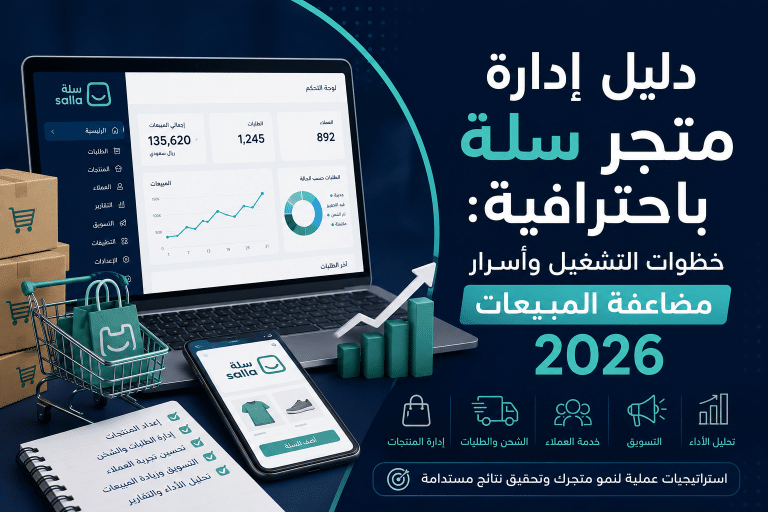
The Complete Guide to E-Commerce Management: Growth Strategies & Increasing Sales in the Saudi Market
Understanding E-commerce Management in Today’s Digital Marketplace
E-commerce management has evolved far beyond simply adding products and changing prices through an online store dashboard. Today, it is an integrated operational and technological function that directly influences business growth. Effective store management connects customer expectations with supply chain operations while improving the performance of digital platforms and supporting smarter pricing decisions based on shopper behavior.
As digital commerce continues to expand rapidly across Saudi Arabia and the wider GCC region, launching an online store is only the beginning. The real challenge lies in managing daily operations efficiently while minimizing unnecessary costs and increasing customer lifetime value (CLV). This is where DigiCraft’s digital marketing and integrated solutions can make a difference by helping e-commerce businesses turn their online stores into efficient and profitable sales channels.
Four Operational Pillars of Effective E-commerce Management
Successful online store management depends on several interconnected areas. Each one has a direct impact on the customer journey, operational efficiency, and overall profit margins:
1. Inventory Management and Digital Catalog Organization
Poor inventory management can quickly result in missed sales, excess stock, and tied-up capital. A well-structured approach should therefore include the following practices:
- Real-time Inventory Synchronization: Connect physical warehouse inventory with the online store continuously to maintain accurate stock levels and prevent overselling products that are no longer available.
- Catalog and Product Data Management: Organize products into clear categories and create accurate, engaging descriptions that target relevant search terms while communicating the real benefits of each product to potential buyers.
- Product Lifecycle Management: Monitor product performance regularly and use strategic promotions or discounts to move slow-selling inventory before it unnecessarily ties up working capital.
2. Logistics, Shipping, and Returns Management
For online shoppers, delivery speed and a straightforward return process can strongly influence their overall experience with a brand. Effective logistics management should therefore cover several key areas:
- Integration with Shipping Providers: Connect the store with leading local delivery companies through APIs to automate shipping label generation and streamline order fulfillment.
- Faster Order Fulfillment: Organize warehouse picking, packing, and dispatch processes efficiently to reduce order-processing times and ensure shipments reach delivery partners without unnecessary delays.
- Reverse Logistics: Simplify return and exchange procedures through automated workflows. A convenient returns experience can strengthen customer confidence and encourage future purchases.
3. Customer Service and Shopping Experience (UX/CX)
Fast and effective customer support can make the difference between an abandoned purchase and a completed order. High-performing e-commerce businesses typically focus on the following areas:
- Automating instant conversations and intelligent responses through WhatsApp Business solutions and conversational tools.
- Monitoring support requests related to payment, delivery, and order issues and coordinating with service providers to resolve them quickly.
- Regularly analyzing customer feedback to identify technical or usability obstacles within the purchasing journey and address them before they affect more customers.
4. Digital Marketing and E-commerce SEO
E-commerce operations and customer acquisition should not be treated as separate functions. Combining paid advertising with valuable content and E-commerce SEO can help attract visitors who are more likely to make a purchase. To explore the latest advertising formats and visual content ideas for online stores, visit DigiCraft on TikTok.
You can also explore growth strategies tailored to online businesses through our integrated digital marketing services and discover ways to strengthen your brand’s presence across the digital marketplace.
E-commerce Management Requirements in the Saudi Market
Saudi Arabia has developed a highly sophisticated digital commerce ecosystem. As a result, online businesses need to align their operational processes with the platforms, payment solutions, logistics services, and regulatory requirements commonly used in the local market:
| Operational Area | Leading Platforms and Solutions | Direct Impact on Performance |
|---|---|---|
| E-commerce Platforms | Salla, Zid, Shopify | Support integration with local e-commerce, invoicing, and logistics requirements. |
| Online Payment Solutions | Mada, Apple Pay, Tabby, Tamara | Offer shoppers familiar payment methods and help reduce friction during checkout. |
| Compliance and Business Verification | Saudi Business Center, Maroof, and electronic commercial registration | Official business documentation can strengthen store credibility and increase customer confidence. |
Consumer preferences and digital commerce regulations continue to evolve, making it important for store owners to stay informed. For ongoing marketing insights and updates on digital market trends, follow DigiCraft on X.
💡 DigiCraft Expert Tip
Many business owners focus heavily on increasing advertising budgets while overlooking friction during checkout. Before spending more on acquiring new visitors, review the purchasing journey. Simplify the checkout process, consider recovering abandoned carts through automated WhatsApp campaigns, and optimize the mobile shopping experience. Improving these areas can help increase sales without necessarily increasing your advertising spend.
Key Performance Indicators (KPIs) for Measuring Store Management Success
Effective e-commerce management requires more than monitoring sales figures. Tracking the right performance indicators gives you a clearer picture of operational efficiency, customer behavior, and profitability:
- Conversion Rate (CR): Measures the percentage of website visitors who complete a purchase. This metric provides valuable insight into the effectiveness of your offers, user experience, and purchasing journey.
- Customer Acquisition Cost (CAC): Represents the total marketing cost required to acquire a new customer. Strong organic search performance can help reduce reliance on paid acquisition and improve this metric over time.
- Average Order Value (AOV): Shows the average amount customers spend per order. For example, cross-selling complementary products and creating relevant product bundles can help increase the value of each transaction. For examples of creative interfaces and digital experiences, visit DigiCraft on Instagram.
- Cart Abandonment Rate: Indicates how many shoppers leave the store without completing checkout. High abandonment can be linked to unexpected shipping costs, complicated checkout steps, limited payment options, or other forms of purchasing friction.
- Customer Lifetime Value (CLV): Estimates the total value a customer can generate throughout their relationship with the business. It is one of the most important metrics for evaluating long-term customer retention and sustainable growth.
Common E-commerce Management Challenges and Practical Solutions
Managing an online store involves a range of operational challenges. Identifying these issues early allows businesses to take corrective action before they begin affecting profitability:
1. Rising Paid Advertising Costs and Declining Returns
Solution: Rather than depending entirely on paid campaigns, invest consistently in E-commerce SEO and develop owned marketing channels such as email and SMS campaigns. These channels can help build a stronger customer base and reduce long-term dependence on paid traffic.
2. High Product Return Rates
Solution: Reduce unnecessary returns by providing accurate product information, high-quality images, videos from multiple angles, detailed size guides, and authentic customer reviews. Giving shoppers a clearer understanding of the product before purchasing can help set more accurate expectations.
3. Inventory Mismatches Between Physical Locations and the Online Store
Solution: Connect ERP systems, points of sale, warehouses, and the online store through synchronized integrations or APIs. Regular inventory audits can also help identify discrepancies and keep stock information accurate across all sales channels.
Overcoming these challenges requires a partner with both technical and digital marketing expertise. You can learn more about our approach by visiting the About DigiCraft page. We also share practical marketing insights and fresh ideas through DigiCraft on Facebook to help businesses improve their digital operations and grow their online stores.
How to Build an E-commerce Management Strategy for Sustainable Growth
If your goal is to achieve consistent growth and increase online sales, your store should follow a structured management process built around the following stages:
- Step 1: Conduct a Comprehensive Technical Audit: Review website performance, mobile responsiveness, loading speed, usability, and technical issues that could affect the customer experience or search visibility.
- Step 2: Automate Repetitive Daily Tasks: Set up automated workflows for invoices, shipping notifications, order updates, stock alerts, and other routine processes to save time and reduce manual errors.
- Step 3: Continuously Analyze Customer Behavior: Use analytics and heatmap tools to understand how shoppers navigate the website, identify where they drop off, and improve pages that create friction.
- Step 4: Develop Loyalty and Retention Programs: Finally, introduce rewards, exclusive offers, personalized promotions, or loyalty points to encourage repeat purchases and increase customer lifetime value.
Take Your E-commerce Store Management to the Next Level
Long-term success in the rapidly growing digital commerce sector requires more than simply keeping an online store operational. Businesses need a strategic approach that connects technology, logistics, customer experience, marketing, and performance analysis to improve efficiency and protect profit margins.
Our team provides integrated digital and marketing solutions covering SEO, user experience optimization, digital advertising, content, and growth strategies designed to help e-commerce businesses maximize their online potential. Contact the DigiCraft team today to request a professional consultation, evaluate your store’s current performance, and build a strategy aligned with your business goals.